
GPU memory optimization is the make-or-break skill behind modern AI. If your model crashes with “CUDA out of memory,” underperforms despite expensive hardware, or can’t handle longer context windows, you’re almost always facing a GPU memory optimization problem—not a “your GPU is too small” problem. Today’s AI stacks are memory-hungry...
AI Hosting for Startups vs Enterprises: The Complete 2026 Guide to Choosing Infrastructure That Scales

AI hosting has become its own discipline. A few years ago, most teams could treat model training, fine-tuning, and inference as “just another workload” on a standard cloud stack. Now, AI hosting decisions shape product roadmaps, security posture, unit economics, and even sales velocity. The big shift is that inference—serving...
Common Challenges in AI Model Hosting

AI model hosting has moved from “deploy a model and expose an endpoint” to a full-stack reliability problem. Today, teams are expected to run AI model hosting with predictable latency, strong security, and controlled costs—while models keep getting bigger, traffic gets spikier, and user expectations rise. In real production environments,...
How to Choose the Right GPU for AI Models
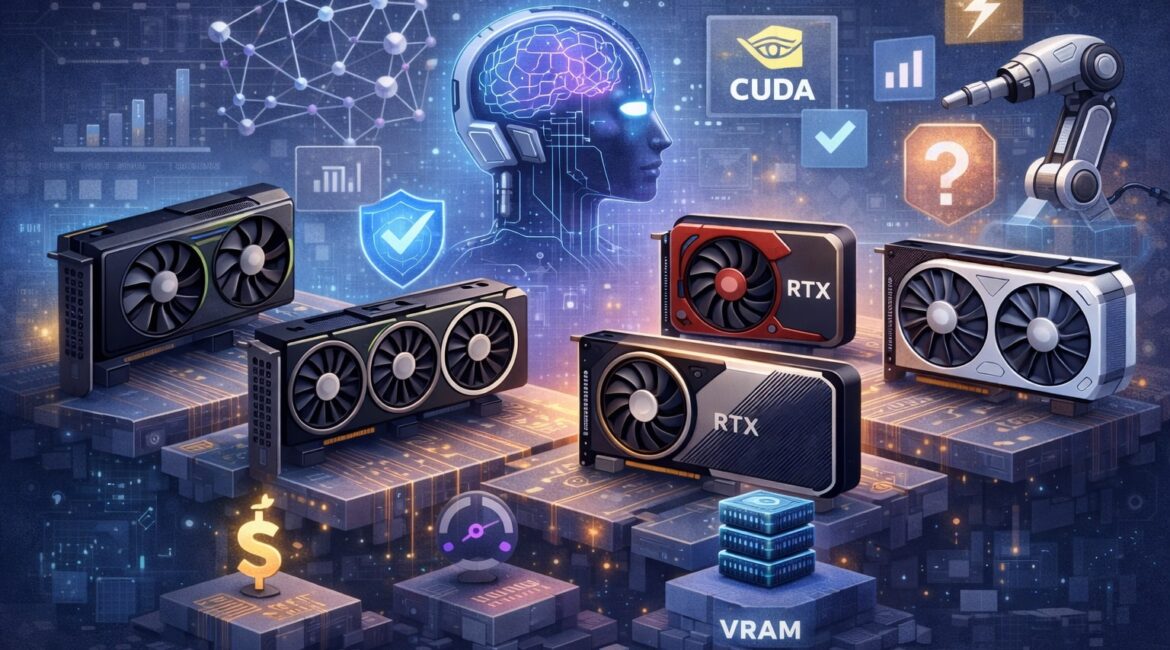
Choosing the right GPU for AI models is one of the highest-impact decisions you can make when building an AI workflow. The “right” GPU is not the one with the biggest marketing number. It’s the one that matches your model size, training style, inference latency target, memory needs, software stack,...
Common Mistakes When Hosting AI Models (2026 Guide)

Hosting AI models looks simple on a whiteboard: pick a model, spin up a GPU, expose an endpoint, and call it a day. In real production, hosting AI models is a system design problem where performance, reliability, security, and cost all fight each other. The most common failures happen when...
AI Hosting for MVPs and Production Apps

AI hosting is no longer a niche decision reserved for research teams. If you’re building an MVP that uses LLMs, embeddings, vision, speech, or agentic workflows, your infrastructure choices will directly shape latency, cost, reliability, and even product direction. The same is true—more intensely—when you move from MVP to production....
Benefits of Hosting AI Models in the Cloud

Artificial intelligence is no longer limited to research labs or a single powerful server in a back room. Modern AI is built, trained, deployed, and improved continuously—and that lifecycle demands compute, storage, networking, security, and operational discipline that are hard to maintain on-premises at scale. That’s why hosting AI models...
Key Components of an AI Hosting Platform

An AI hosting platform is the foundation that lets teams deploy, run, scale, secure, and monitor AI workloads—especially modern large language models (LLMs), vision models, and real-time inference services—without turning every release into an infrastructure fire drill. The best AI hosting platform behaves like a product: predictable performance, clear guardrails,...
Cloud Hosting vs On-Prem AI Infrastructure: The Complete 2026 Decision Guide

Modern AI projects live or die on infrastructure choices. When teams compare cloud hosting vs on-prem AI infrastructure, they’re really deciding how they want to buy, run, secure, and scale compute—especially GPU capacity—while controlling data, latency, and long-term cost. The “right” answer is rarely all-cloud or all-on-prem. It’s usually a...
Serverless AI Hosting: Pros and Cons for Developers
Serverless AI Hosting is a deployment model where your AI workloads—such as large language model (LLM) inference, vision models, or vector search—run on fully managed, on-demand infrastructure that automatically scales up when requests arrive and scales to zero when idle. Instead of provisioning and babysitting servers (or even containers), you...